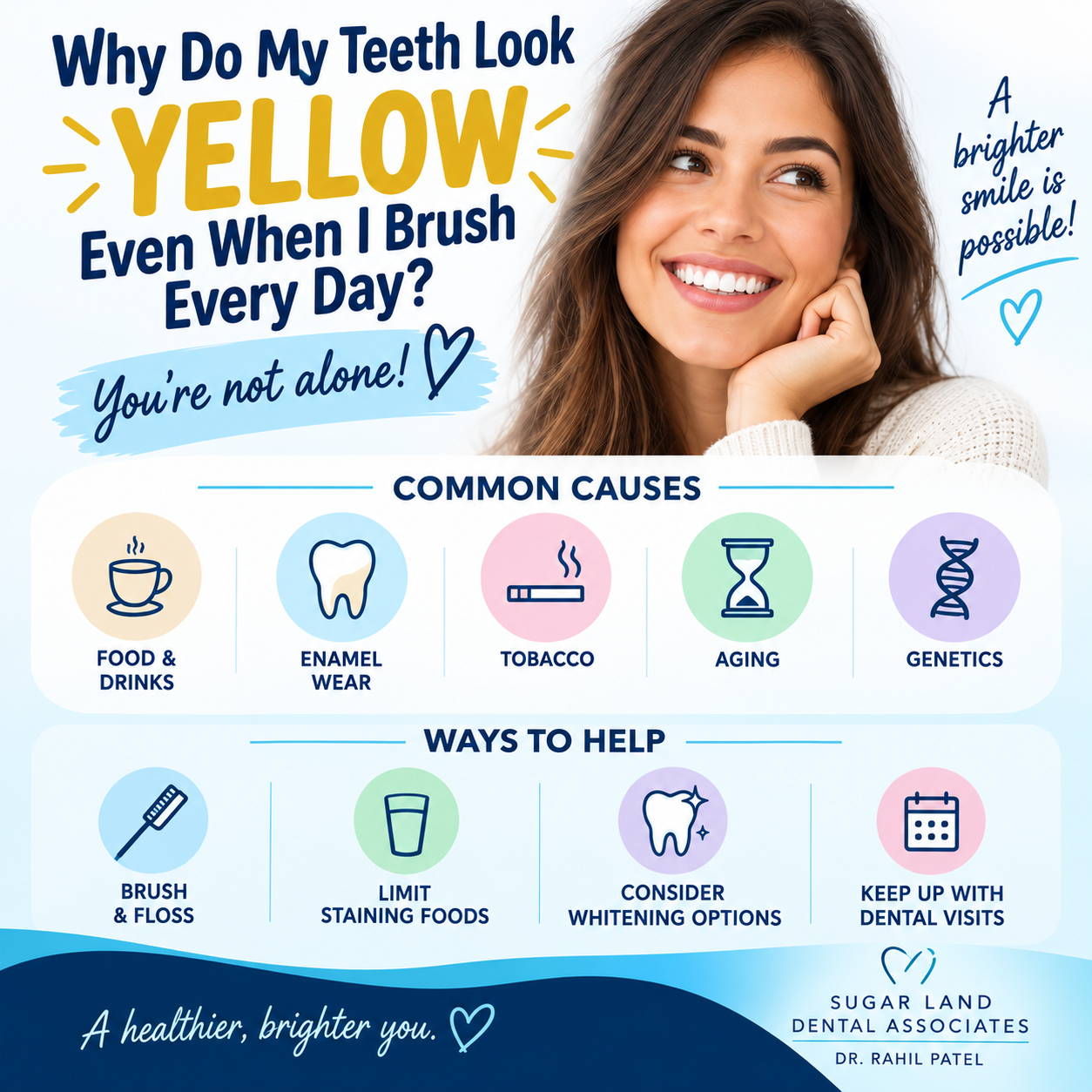
You brush every morning and every night, but when you look in the mirror your teeth still seem more yellow than you would like. It can be frustrating, especially when you feel like you are doing 😬 everything right.
The first thing to know is that yellow-looking teeth do not automatically mean your teeth are dirty or unhealthy. Tooth color is influenced by several factors. Brushing removes plaque and can limit some surface staining, but it cannot change every cause of discoloration.
1. Your Natural Tooth Color 🦷
Healthy teeth are not naturally paper-white. Under the enamel is dentin, which typically has a warmer yellow tone. Because enamel is somewhat translucent, the dentin underneath influences the shade you see.
Some people naturally have lighter or darker teeth than others, just as people have different hair and eye colors.
2. Enamel Can Become Thinner Over Time ⏳
With age and normal wear, enamel can become thinner. Acid exposure can also contribute to enamel erosion. As enamel thins, more of the underlying dentin can show through, making teeth appear warmer or more yellow.
3. Coffee, Tea, and Other Surface Stains ☕
Coffee, tea, red wine, tobacco, and deeply pigmented foods can leave external stains on enamel. Brushing helps, but some stains become difficult to remove at home. A professional dental cleaning can remove certain external stains and deposits.
4. Genetics Play a Role 🧬
Natural enamel thickness and tooth shade vary from person to person. Two people with equally good oral-hygiene habits can therefore have noticeably different tooth colors.
5. Some Discoloration Develops Inside the Tooth
Not all staining is on the surface. Certain medications, developmental factors, previous trauma, and other conditions can cause intrinsic discoloration. Because the color is within the tooth structure, simply brushing harder will not remove it.
6. Brushing Harder Is Not the Answer 🪥
If teeth look yellow, it can be tempting to scrub more aggressively or use highly abrasive products. More pressure does not necessarily create whiter teeth and may contribute to enamel wear or gum irritation.
A soft-bristled toothbrush and good technique are better for routine plaque removal. If color is your concern, the first step is understanding what type of discoloration is present.
7. Whitening May Help Certain Types of Discoloration ✨
Professional whitening is designed to lighten natural tooth structure and can be effective for many common types of discoloration. Results vary based on the starting shade and the cause of the color.
Crowns, veneers, and tooth-colored fillings do not whiten the same way natural teeth do, so existing restorations are an important part of cosmetic planning.
When Should You Ask Your Dentist About Tooth Color?
If all of your teeth have gradually become darker, the cause may be normal aging or staining. However, if one tooth suddenly becomes darker than the surrounding teeth, it deserves an evaluation because previous trauma or changes inside the tooth can sometimes cause discoloration.
At Sugar Land Dental Associates, Dr. Rahil Patel can evaluate whether the color is primarily from surface staining, natural tooth structure, existing restorations, or another cause. The goal is not to make every smile the same shade; it is to understand what is causing the color and discuss safe, realistic options.
So if you brush faithfully and your teeth still look yellow, do not assume you are doing something wrong. Healthy teeth come in many shades, and when you would like a brighter smile, 💙 understanding the reason for discoloration is the best place to start.
From Dr. Rahil Patel
“Yellow teeth do not automatically mean unhealthy teeth. I first want to understand why the teeth look darker, because surface staining, natural tooth color, enamel thickness, and internal discoloration are not treated the same way.”
Myth vs. Fact
❌ Myth: If I brush harder, my teeth will eventually become whiter.
✅ Fact: Brushing removes plaque and some surface staining, but it cannot change your natural dentin color or remove every type of discoloration. Aggressive brushing can also damage teeth and gums.
Quick Takeaways
• Healthy natural teeth are not always bright white. 🦷
• Dentin and enamel thickness influence tooth shade.
• Coffee, tea, tobacco, and pigmented foods can cause surface staining. ☕
• Brushing harder is not a safe whitening strategy. 🪥
• Whitening can help many types of discoloration, but not every type. ✨
FAQ
Q: Why are my teeth yellow even though I brush every day?
A: Natural dentin color, enamel thickness, aging, surface stains, genetics, and intrinsic discoloration can all influence tooth shade.
Q: Can brushing make yellow teeth white?
A: Brushing removes plaque and may reduce some surface stains, but it cannot change every cause of tooth discoloration.
Q: Can professional whitening help yellow teeth?
A: It can help many types of natural-tooth discoloration, but results depend on the cause. Crowns and fillings do not whiten like natural teeth.
Q: Why is one tooth darker than the others?
A: A single dark tooth can have several causes, including previous trauma or changes inside the tooth, and should be evaluated.
Concerned about the color of your teeth?
If you are brushing every day but still wish your smile looked brighter, call 281-207-4161 to schedule a consultation with Dr. Rahil Patel at Sugar Land Dental Associates. We can identify what is contributing to the color of your teeth and discuss whitening or other options that make sense for your smile. ✨💙