
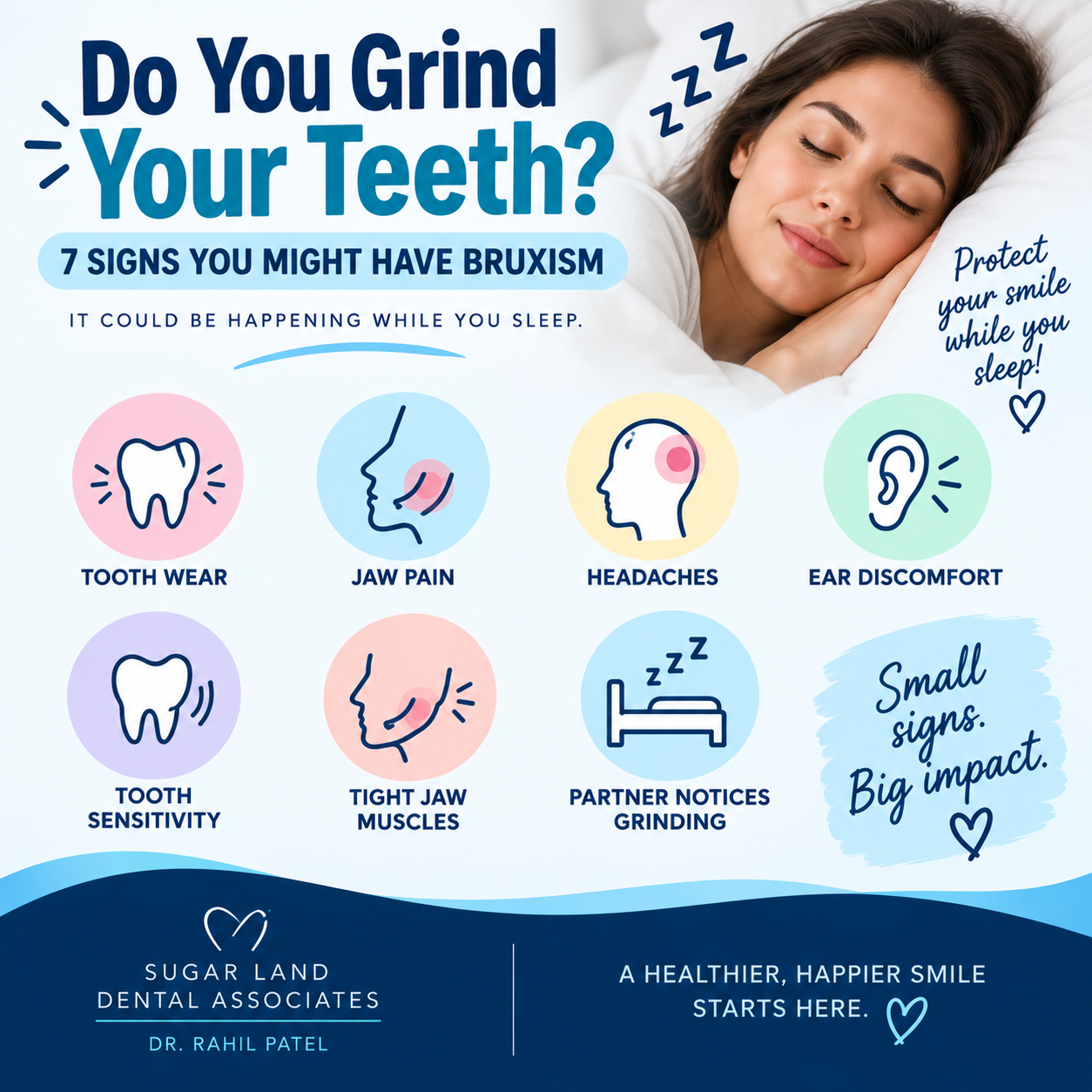
Many people grind or clench their teeth without realizing it. This habit is called bruxism. It can 😬 occur while you are awake, while you sleep, or both.
Because sleep bruxism happens when you are unconscious, you may not hear or feel yourself grinding. Instead, the first clues may show up in your teeth, jaw muscles, or morning routine. Bruxism does not look the same in every patient, but here are seven signs worth paying attention to.
1. Your Teeth Look Worn or Flattened 🦷
Repeated tooth-to-tooth contact can gradually change the shape of the biting surfaces. Teeth may appear flatter, shorter, or more polished in certain areas.
Wear can have multiple causes, so the pattern needs to be evaluated rather than assuming grinding is always responsible.
2. You Wake Up With Jaw Soreness 😣
Clenching or grinding can overwork the muscles used for chewing. Some people notice jaw tightness, fatigue, or soreness when they wake up or after periods of concentration.
3. You Notice Chipped or Cracked Teeth
Heavy or repeated forces can contribute to small chips, fractures, or damage to existing dental restorations. A cracked tooth can also develop for other reasons, so any new damage deserves an examination.
4. Your Teeth Feel Sensitive 🥶
When tooth structure becomes worn or damaged, some people notice increased sensitivity to cold, sweets, or other triggers. Sensitivity has many possible causes, which is why identifying the source matters.
5. You Have Morning Head or Facial Discomfort
Overworked jaw muscles can sometimes be associated with discomfort around the temples, cheeks, or jaw, particularly after sleep. Headaches have many causes, so dental grinding should be considered as one possibility rather than assumed to be the explanation.
6. Someone Hears You Grinding at Night 😴
A spouse or family member may notice grinding sounds before you ever realize it is happening. Not all bruxism makes noise, but this observation is worth mentioning during your dental visit.
7. Your Dental Work Shows Repeated Wear or Damage 👑
Fillings, crowns, and other restorations are designed to function under normal chewing forces. Repeated heavy loading may contribute to wear or damage in some patients. Your dentist may notice patterns during routine examinations even if you have no symptoms.
Why Do People Grind or Clench?
Bruxism is not caused by one single factor. Sleep-related grinding can be influenced by sleep physiology and other factors, while awake clenching may occur during concentration or periods of stress. Certain medications, habits, and sleep-related conditions may also be relevant for some patients.
Because the cause and pattern can differ, treatment should be based on the individual rather than assuming everyone who grinds needs the same solution.
What Can a Dentist Do About Bruxism?
Dr. Rahil Patel can examine the teeth, existing restorations, bite, and jaw muscles for signs that may be consistent with grinding or clenching. If protection is appropriate, a custom night guard may be recommended for some patients to reduce direct tooth-to-tooth contact during sleep.
A night guard does not necessarily eliminate the underlying grinding behavior, and it is not the right answer for every symptom. Its role is often to help protect the teeth and restorations when clinically appropriate.
At Sugar Land Dental Associates, the goal is to identify what is actually happening before recommending treatment. If you suspect you are grinding or clenching, an evaluation can help 💙 distinguish bruxism from other causes of tooth wear, sensitivity, or jaw discomfort.
From Dr. Rahil Patel
“Many patients are surprised when I show them signs of grinding because they have never felt themselves doing it. The teeth often give us clues, and catching those patterns early can help us decide whether protection or further evaluation is appropriate.”
Myth vs. Fact
❌ Myth: If I don’t hear myself grinding at night, I don’t have bruxism.
✅ Fact: Sleep bruxism can occur without you being aware of it, and not every episode is loud enough for someone else to hear.
Quick Takeaways
• Bruxism can happen while awake or asleep. 😴
• Worn teeth and morning jaw soreness can be clues. 🦷
• Sensitivity, chips, and restoration wear can have several causes and should be evaluated.
• A custom night guard may help protect teeth in selected patients.
• An examination can help determine whether your symptoms fit a grinding or clenching pattern.
FAQ
Q: What is bruxism?
A: Bruxism is involuntary or habitual grinding or clenching of the teeth. It can occur during wakefulness or sleep.
Q: How do I know if I grind my teeth at night?
A: Possible clues include tooth wear, morning jaw soreness, sensitivity, damaged restorations, or a sleep partner hearing grinding. A dental examination can help assess the pattern.
Q: Can grinding damage my teeth?
A: Repeated heavy tooth-to-tooth forces can contribute to wear, chips, fractures, or stress on dental restorations in some patients.
Q: Will a night guard stop me from grinding?
A: A night guard is primarily used to protect teeth and restorations from direct contact in appropriate patients. It does not necessarily eliminate the underlying grinding behavior.
Think you might be grinding your teeth? Schedule with us now!
If you are waking up with a sore jaw, noticing worn teeth, or wondering whether you grind at night, call 281-207-4161 to schedule an evaluation with Dr. Rahil Patel at Sugar Land Dental Associates. We can look for signs of bruxism and discuss whether any protective or preventive steps make sense for you. 😴🦷💙